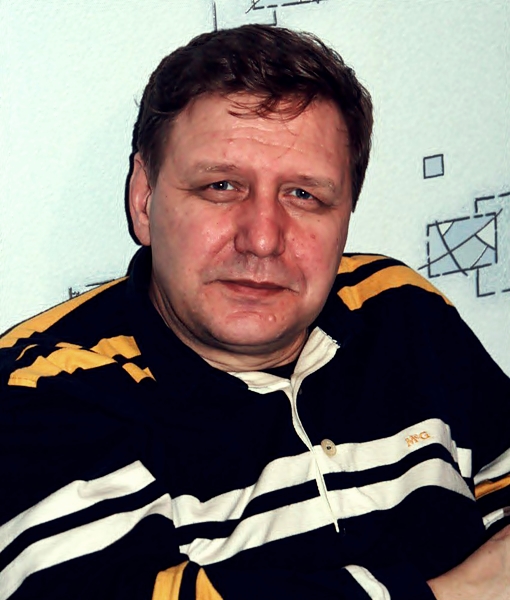
Assoc. prof. / Researcher dr. Oleksandr Kalnychenko
V.N. Karazin Kharkiv National University / Matej Bel University in Banská Bystrica (Ukraine / Slovakia)
Oleksandr Kalnychenko is Associate Professor of Mykola Lukash Translation Studies Department at V.N. Karazin Kharkiv National University, Ukraine, and Researcher of the Slavic Languages Department at Matej Bel University in Banská Bystrica, Slovakia. He is an official coordinator and co-editor of the Ukrainian version of John Benjamins’ Handbook of Translation Studies online and printed, the Editor-in-Chief of Protey and Novyi Protey translators' miscellanies. An author of more than 130 book chapters and articles and a dozen of manuals, he has edited or co-edited the re-publication of the works of Oleksandr Finkel, Volodymyr Derzhavyn, Mykola Lukash, and Hrihirii Maifet, compiled an Anthology of Ukrainian Translation Thinking of the 1920s-early 1930s, and translated 32 books of fiction.
Ideological Shifts and the Politics of Retranslation in Ukraine
This talk examines the ideological forces shaping retranslation practices in Ukraine across three key historical periods, revealing how translation has served both as a tool of control and a form of cultural resistance. The first wave emerged during 1933–1935, when the Soviet regime labeled non-Russian nationalism a threat to unity. A media-led campaign in Ukraine accused translators of “nationalistic sabotage,” prompting widespread revisions of political and literary texts to align with Russian linguistic norms and Soviet ideology. Retranslation became a mechanism of Russification, suppressing Ukrainian identity and centralizing cultural production.
The second wave followed the Khrushchev Thaw in the 1960s–early 1970s. Rehabilitated translators from the 1920s saw their works republished in updated forms, marking a deliberate act of cultural restoration. A prominent example is the 12-volume Collected Works of Jack London (1969–1972), which drew from an earlier 30-volume edition, reflecting renewed interest in pre-Soviet translation efforts.
Despite Ukraine’s independence in 1991, a third wave of retranslation did not immediately materialize. The 1990s saw a decline in Ukrainian-language translations, as publishers favored Russian-language editions for broader market appeal. A resurgence began after the Orange Revolution, driven by evolving translation norms and efforts to restore censored content.
Together, these waves highlight the complex interplay between language, ideology, and national identity in Ukraine. Retranslation has mirrored shifting political agendas, serving alternately as a means of domination and a pathway to reclaim cultural sovereignty.