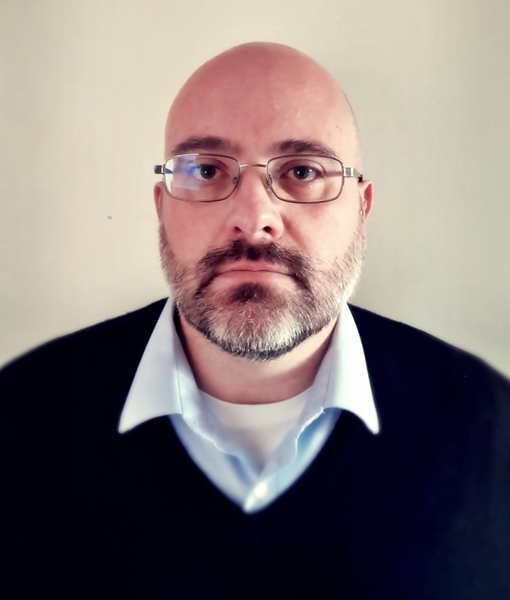
Prof. dr. Federico M. Federici
University College London (United Kingdom)
Federico M. Federici is Professor of Intercultural Crisis Communication and Director of the Centre for Translation Studies, University College London. His research primarily focuses on translators and interpreters as intercultural mediators and the study of translation in crises. He is currently working on equal access to critical information in multilingual contexts and empirical research methods. His articles have appeared in journals International Journal of Disaster Risk Reduction, Disaster Prevention and Management, Language and Intercultural Communication, Translation Spaces, Translator and Interpreter Trainer, and The Italianist. He edited Language as a Social Determinant of Health (2022), Mediating Emergencies and Conflicts (2016), and Translating Hazards, a Special Issue of The Translator (2022). He co-edited with Sharon O’Brien Translating Crises (2022), Translation in Cascading Crises (2019); with Christophe Declercq Intercultural Crisis Communication (2019), and with Callum Walker Eye Tracking and Multidisciplinary Studies on Translation (2018).
Federico M. Federici co-authored reports on crisis communication policies (available here), multilingual communication in the humanitarian sector (here), and government briefs (here).
Crisis of Trust: Reaching Translation Consensus When Communicating Health Risks
When patients have limited English proficiency (LEP), they rely on others to access health information in the United Kingdom. Ideally, medical interpreters mediate these encounters in person, or remotely. However, time constraints, resourcing, and systemic issues have shown how family members or bilingual healthcare professionals also act as language brokers, including children. When these encounters pertain to deciding about life-altering cancer treatment, the use of interpreters and translated consent forms is recommended.
If LEP patients undergoing cancer treatment have limited access to information, this will impact clinical care and outcomes, exacerbating health inequalities, when patients have limited language proficiency and live in the most deprived. This paper reflects on the findings of the Translate Myeloma Project (2023–2026), which tested the impact of different translation modalities on comprehension of myeloma, a blood cancer, among Bengali- and Sylheti-speaking communities in London. The three-phase project focused on the impact of translation technologies and modalities on enabling understanding of health-risks among participants in Phases 1 and 2. In Phase 3, professional interpreters and oncologists worked with community organisations and LEP participants to co-design translated information in accessible formats.
The project’s findings led to some innovation in patient consent practices and on recommendations about the use of large language models and machine translation outputs in clinical settings. The talk will critically analyse the results in relation to health literacy and health equity and discuss the impact of the study on the participants and the engagement with community advocates.