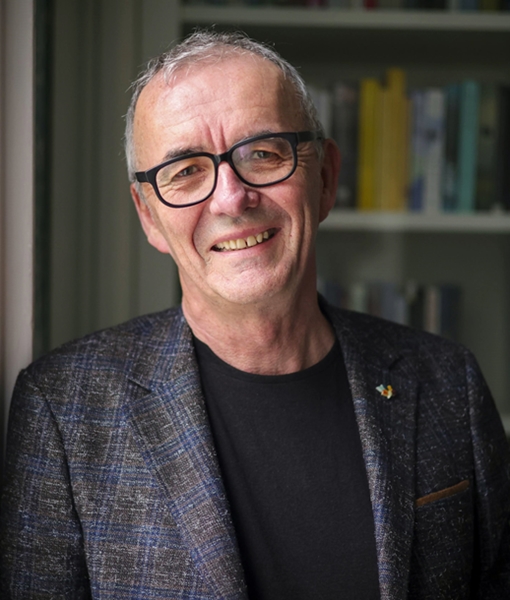
Prof. dr. Michael Cronin
Trinity College Dublin, the University of Dublin (Ireland)
Michael Cronin is Professor of French and Senior Researcher in the Trinity Centre for Literary and Cultural Translation, Trinity College Dublin. Among his published titles are Translating Ireland: Translation, Languages and Identity (1996); Across the Lines: Travel, Language, Translation (2000); Translation and Globalization (2003); Translation and Identity (2006); Translation goes to the Movies (2009); The Expanding World: Towards a Politics of Microspection (2012), Translation in the Digital Age (2013); Eco-Translation: Translation and Ecology in the Age of the Anthropocene (2017), Irish and Ecology: An Ghaeilge agus an Éiceolaíocht (2019) and Eco-Travel: Journeying in the Age of the Anthropocene (2022). He is a Member of the Royal Irish Academy, the Academia Europaea, an Officier in the Ordre des Palmes Académiques, a Fellow of Trinity College Dublin and an Honorary Member of the Irish Translators and Interpreters Association.
Translation, Minority and AI
Translation is a major issue for minority or minoritised languages everywhere as translation is the main route by which ideas, texts, and forms of expression enter these languages from dominant world languages. A recurrent concern for minority languages has been the digital divide where digital resources are largely concentrated in major languages thus limiting the use of digital translation tools for minority languages. One of the promises of AI-assisted translation is that it will greatly facilitate the volume of translation into minority or lesser-used languages and thus facilitate their development and use. The lecture will ask whether this is necessarily a positive development and whether there may be a need to think more critically about how lesser translated languages engage with digital technologies. From an ecological and cultural standpoint, the promised efficiencies of AI in translation for minority languages may prove to be less beneficial than their corporate advocates would claim.